

SQL Server Efficiency, Reliability And Performance
SQL Server applications are often comprised of a large number of inter-related and complex moving parts that all require to work reliably and efficiently.
Frequently, SQL Server systems suffer from poor design choices, improper coding techniques, and are the root-cause behind poor performance, reliability, data integrity, and security vulnerabilities. Issues such as record locking, duplicate records, slow performance, etc. can almost always be traced to deficiencies in the SQL Server database design itself, and / or the absence or misuse of proper SQL Server engineering methods.
It is very common for developers to invest lots of “down time” troubleshooting problems and bugs that are very difficult to pin down due to underlying design and implementation deficiencies. While SQL Server design and implementations vary widely, the end result is usually the same: quality and performance of the system degrades, and the effort and cost to maintain and extend the system increases.
This is when it makes sense to call a “time out,” and have expert SQL Server engineering professionals take a close look at your SQL Server database, to identify and remediate underlying issues.
PCApps expert SQL engineering professionals employ a standard check-list of SQL Server design and implementation methods and many years of experience and advanced database analytics tools to identify root-cause issues behind poor SQL database performance, reliability, data integrity, security, and overall maintainability of the system.
The SQL Audit Process
Following a GoToMeeting session to review your system, and address key questions or concerns you may have, the first step in our standard SQL Audit process is an independent assessments of your database design and implementation. We employ a proprietary “SQL Audit Engine” designed to facilitate audit coverage and efficiency, and capture important qualitative and quantitative measures. Once our Engineers have completed their assessments, we meet as a team to review the independent findings, reconcile any gaps or incongruities, and develop and deliver a consensus audit document. The final step is a review session with your team, to insure that all of our audit findings and recommendations are fully understood, and to address specific questions and concerns.
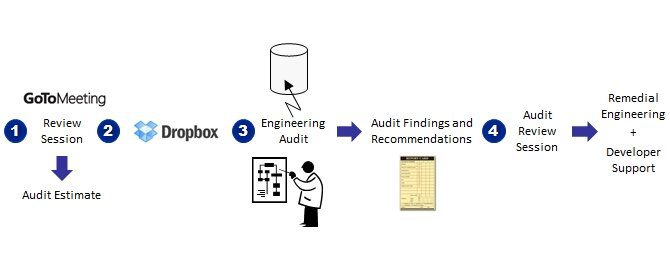
PCApps SQL Audits are fully documented. Clients deliverables include a high-level management overview that describes the audit scope, summary findings and key recommendations, and source engineering audit details including specific observations, area(s) of impact, severity, and remedial engineering methods.